



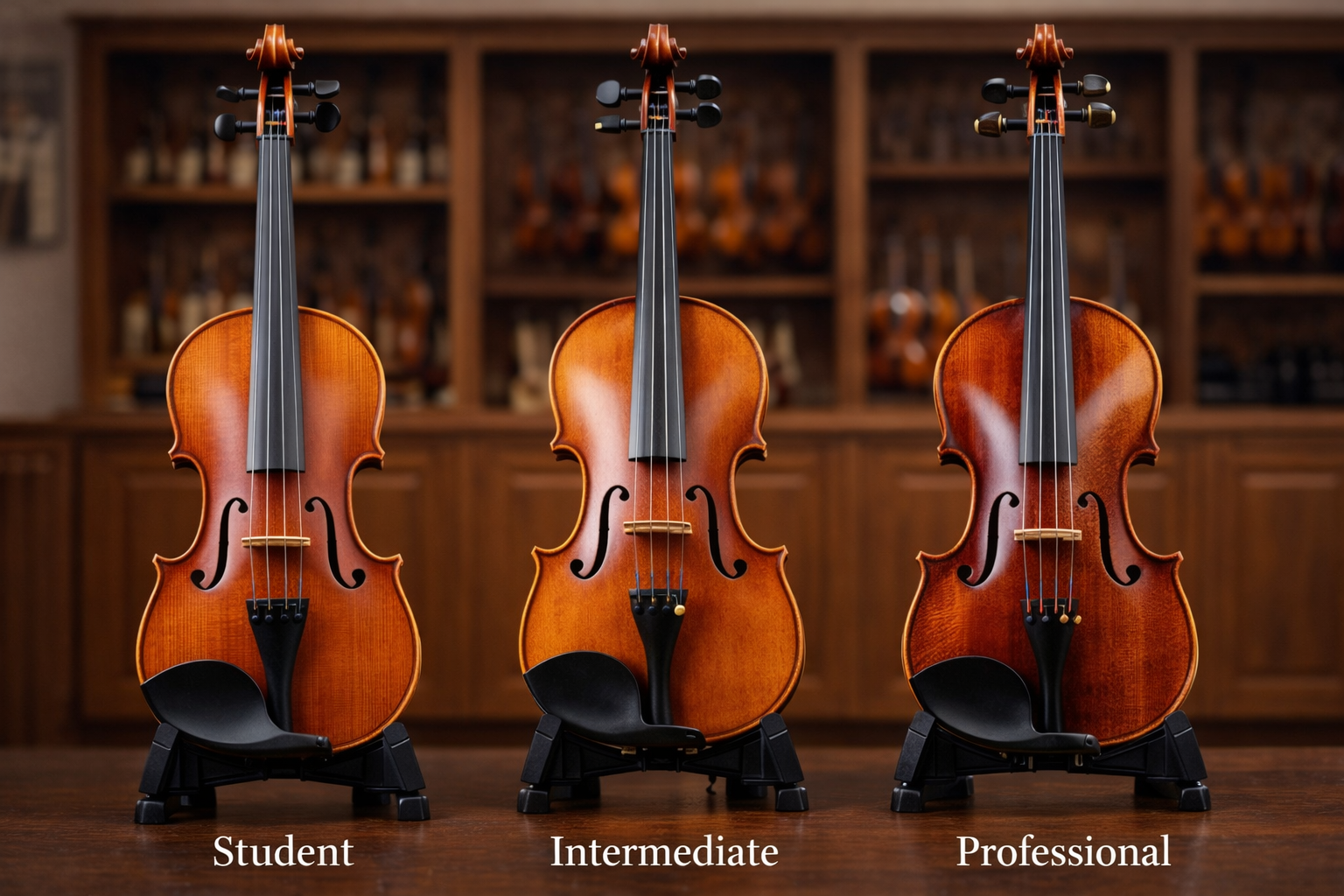
When players and parents begin exploring orchestral string instruments, one of the most common points of confusion is the difference between student, intermediate, and professional instruments. These terms are used widely, but they’re not always explained clearly, and they don’t mean the same thing across every music store.
At Von’s Violin Shop, these distinctions matter, because each category exists for a specific type of player at a specific stage. Understanding how these instruments differ helps families and adult players make informed choices without feeling rushed or pressured into something that doesn’t actually serve their needs.
Student Instruments: Built for Learning, Not Cutting Corners
Student instruments are the starting point for most players, whether they are children entering school orchestra or adults learning for the first time. At Von’s Violin Shop and Northland Violins, student instruments are the lowest tier of instrument we sell, but that description can be misleading if it’s taken to mean “low quality.”
Student instruments are typically factory produced rather than individually handcrafted. That factory production is what keeps costs reasonable and ensures consistency from one instrument to the next. What matters is not where the instrument is made, but how it is selected and prepared.
A proper student instrument should be structurally sound, stable under tension, and responsive enough to allow a beginner to learn basic tone production, intonation, and bow control. When professionally set up, a student instrument can perform far beyond what most people expect at that level.
What student instruments are not designed to do is provide extreme tonal nuance or the subtle responsiveness that advanced players rely on. Those qualities are unnecessary at the beginning and can even be distracting. A good student instrument supports learning by being predictable and forgiving.
This is why student instruments from a dedicated violin shop differ so dramatically from low-cost instruments found online or at other music retailers. They are selected to function as real orchestral instruments, not just look like them.
Intermediate Instruments: Where Craft and Character Begin to Matter
Intermediate instruments occupy the space between learning and artistry. They are intended for players who have developed enough technique to notice and benefit from differences in tone, response, and balance.
Unlike student instruments, intermediate instruments often involve a higher degree of handwork. This may include more refined graduation of the plates, better-quality tonewood, and greater attention to setup details that influence responsiveness and color of sound.
For students, this level is often reached when teachers begin commenting not just on accuracy, but on tone quality and musical expression. For adult players, intermediate instruments are frequently the first step into instruments that feel expressive rather than purely functional.
Intermediate instruments reward consistent bow control and more precise finger placement. They tend to offer greater dynamic range and a more complex tonal palette. At the same time, they are still durable and practical enough for regular use.
At Von’s Violin Shop, intermediate instruments are chosen for players who are clearly committed and ready to engage more deeply with sound, without yet needing the full refinement of a professional instrument.
Professional Instruments: Individual Voices, Individual Players
Professional instruments are fundamentally different from student and intermediate instruments. These instruments are individually crafted or produced in small workshops, with each instrument developing its own voice and character.
Professional instruments are not defined by age alone. Some are newly made by contemporary makers, while others may be decades or even centuries old. What they share is a level of responsiveness, tonal complexity, and projection that supports advanced technique and musical interpretation.
At this level, small differences matter. How the instrument responds to subtle bow speed changes, how quickly notes speak, how evenly sound carries across registers—these are the qualities professional players depend on.
Because of this, professional instruments are not “better” in a general sense. They are better for players who can use what they offer. For a beginner or early student, much of a professional instrument’s potential would go unused.
This is also why professional instruments represent a significant financial investment. They reflect craftsmanship, materials, and tonal development that go far beyond what is required early on.
How the Differences Apply Across All Four Instruments
These distinctions apply consistently across violin, viola, cello, and double bass, even though the physical size and playing posture differ.
Student instruments across all four are designed to be reliable and accessible. Intermediate instruments introduce refinement and individuality. Professional instruments prioritize responsiveness and tonal depth.
The progression is not about prestige. It is about matching the instrument to the player’s stage of development.
Knowing When a Player Is Ready to Move Up
One of the most common questions families and adult players ask is how to know when it’s time to move from one category to the next.
Readiness is rarely determined by time alone. Instead, it often shows up in how a player interacts with the instrument. When a student begins to outgrow the tonal limitations of a student instrument, teachers may notice that the instrument no longer reflects the player’s musical intent. Sound may feel constrained even when technique is solid.
Similarly, adult players may feel that their instrument responds unevenly or lacks the expressive range they are trying to achieve. At that point, an intermediate or professional instrument can feel like a release rather than a challenge.
Teacher input is often valuable here, but so is trying instruments side by side. Feeling the difference matters more than reading specifications.
Choosing the Right Instrument Without Pressure
At Von’s Violin Shop, the goal is never to push players into higher categories prematurely. Each level exists for a reason, and staying in the right category for your current needs is both sensible and musically healthy.
Student instruments are meant to be played, learned on, and enjoyed. Intermediate instruments are meant to inspire growth. Professional instruments are meant to serve artistry.
Talk To Us
Understanding the difference between student, intermediate, and professional instruments removes a great deal of anxiety from the buying process. These categories are not about status; they are about function, development, and musical goals.
If you’re unsure where you or your child fits within that spectrum, or if you’d like to experience the differences firsthand, we’re happy to help. Feel free to contact us, call, or come in with questions. Our role is to provide clarity, not pressure—and to help every player find the instrument that truly fits where they are right now.