



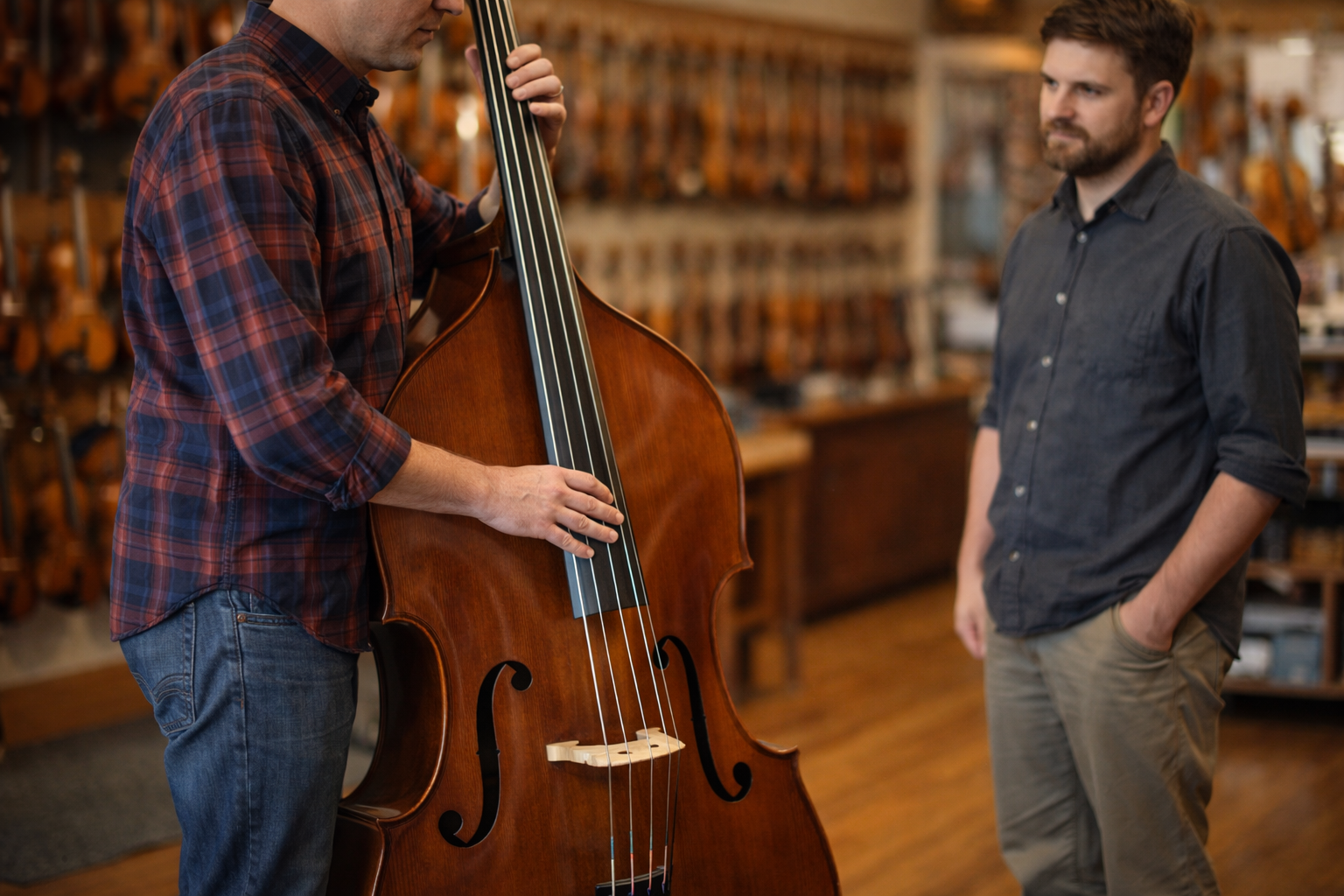
An instrument can look beautiful and still feel wrong in the hands. Physical fit is not just about whether a violin, viola, cello, or bass is technically the correct size. It is about how the instrument interacts with the body. If the instrument causes strain, limits reach, or feels unstable, that will affect tone, endurance, and long-term progress.
At Von’s Violin Shop, physical fit is treated as a serious part of musical development. Comfort is not a luxury. It is foundational to proper technique.
Fit Is More Than Size
Many players assume that once the size is correct, the instrument should simply “work.” In reality, physical fit includes several variables:
The overall size of the instrument
The weight and balance
The reach required in first position
How the instrument rests on the body
How the bridge, fingerboard, and setup affect string height and response
A violin that is too small can feel unstable and difficult to control. One that is too large can force the left arm to stretch and the shoulder to lift. The same principles apply to viola, cello, and bass. If the instrument requires constant adjustment to keep it in place, something is wrong.
Sometimes the issue is obvious. A student may have outgrown a fractional instrument years ago. Other times the problem is subtle. The instrument might technically be the right size but paired with a shoulder rest that does not match the player’s build. A poorly cut bridge can raise string height and make the left hand work harder than it should. A warped fingerboard can create uneven response. These are not issues a player should ignore.
Violin and Viola: Stability Without Tension
With violin and viola, comfort begins at the contact points. The instrument should sit securely between the collarbone and jaw without being clamped.
If a player must squeeze with the chin to prevent slipping, the support system is wrong. If the left shoulder rises to hold the instrument in place, tension will follow. If the neck or upper back begins to ache after a short playing session, the instrument may not be fitted correctly.
A properly fitted chin rest and shoulder rest make a measurable difference. Chin rests are not one-size-fits-all. They vary in height, contour, and placement. Shoulder rests vary in shape and angle. The wrong combination can force the head to tilt excessively or push the instrument into an awkward angle.
Even when the instrument size is correct, a poor fit at these contact points can make the instrument feel heavy or unstable.
Cello: Reach and Endpin Geometry
For cello, physical fit depends heavily on the endpin length and body alignment.
If the endpin is too short, the player collapses inward and crowds the instrument. If it is too long, the player must reach forward and strain the shoulder. The upper edge of the cello should contact the chest comfortably, and the left hand should reach first position without extreme wrist bending.
If a student struggles to reach notes in first position or feels consistent tension in the forearm, that may indicate either an incorrect size or improper positioning. A cello that feels “too big” might simply be set up poorly. On the other hand, a student who has grown significantly may genuinely need a larger instrument.
Double Bass: Height and Balance
Double bass presents similar concerns, amplified by its size. If the bass is too tall, the player lifts the shoulder unnaturally to reach the fingerboard. If it is too short, the player hunches.
The instrument should allow a tall, relaxed stance. The left hand should reach comfortably without the wrist collapsing. If the bass feels unstable or forces the player into a twisted posture, adjustment is required.
Because basses often pass through families or schools, it is common for students to play on instruments that are not correctly sized or adjusted for them.
Setup Matters More Than Most Players Realize
Even the correct size instrument can feel wrong if the setup is poor.
A bridge that is cut too high increases string tension under the fingers. A soundpost that is out of position can change balance and response. A warped fingerboard can create buzzing or uneven notes. Strings that are inappropriate for the instrument can feel stiff and unresponsive.
These issues do not just affect sound. They affect physical comfort. When an instrument resists the player, the body compensates. Compensation leads to tension. Tension leads to fatigue.
An instrument that has been under tension for decades but rarely played may also need evaluation. Wood moves over time. Glue joints can shift. Seams can open slightly. What feels like a “bad instrument” may simply be an instrument that needs professional adjustment.
When the Instrument Is Simply the Wrong Size
Sometimes the answer is straightforward. A student may still be playing a fractional instrument long after growth makes it impractical. A viola may be physically too large for the player’s arm length. A cello may require excessive reach in basic positions.
No amount of adjustment can turn an oversized instrument into a comfortable one. Likewise, an instrument that is too small can feel cramped and limit tone production.
If the player feels crowded, overstretched, or unable to maintain relaxed posture, that is not something to push through. It is a signal.
The Most Important Indicator: Tension
Physical discomfort is rarely subtle. It shows up as tight shoulders, sore wrists, aching neck muscles, or fatigue after short practice sessions.
An instrument that fits correctly should allow relaxed alignment. Playing will require effort, especially for beginners, but it should not create persistent strain.
If the instrument does not feel right, the solution is not guesswork.
Why Evaluation Matters
Trying random adjustments at home often makes things worse. Shoulder rests are swapped without understanding alignment. Endpins are extended too far. Strings are changed without considering setup.
At Von’s Violin Shop and Northland Violins, evaluation begins with observation. The player is asked to hold and play the instrument. Posture, reach, and balance are assessed. The instrument itself is inspected for setup concerns. If adjustments can solve the issue, they are made. If the instrument is too small or too large, that is identified clearly.
This evaluation is offered without pressure. The goal is to determine whether the problem is size, setup, support, or something else entirely.
If It Doesn’t Feel Right, Bring It In
If your instrument feels awkward, heavy, unstable, or uncomfortable, do not assume you simply need more practice. Physical fit is not something to endure. It is something to correct.
Whether the instrument has been in your family for years, came from a relative, or was purchased elsewhere, Von’s Violin Shop can evaluate it. If it needs adjustment, you will be told what is required. If the size is wrong, that will be explained. If the issue is minor, it can often be corrected quickly.
An instrument should feel like a tool for music, not a source of strain. If it does not feel right, have it examined and let the problem be properly diagnosed.