



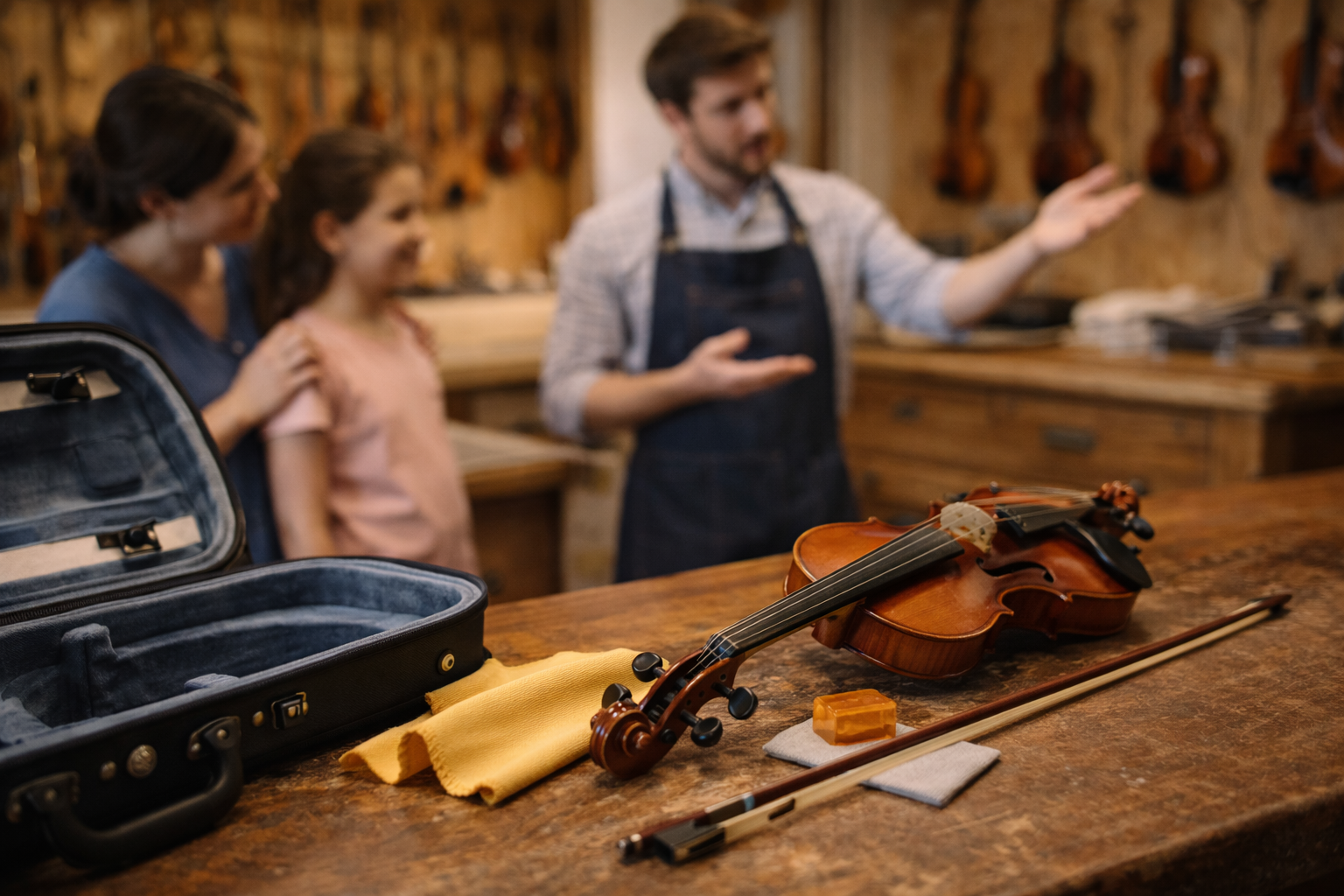
When someone purchases a violin, viola, cello, or bass, it is easy to assume that everything needed to start playing comes with the instrument. In reality, orchestral string instruments are traditionally sold on their own. The instrument itself is only part of what a player needs to play comfortably, safely, and successfully.
At Von’s Violin Shop, when you buy an instrument, you are buying the instrument alone. All accessories are purchased separately. This is not a drawback. It is intentional, and it allows each player to be properly fitted and equipped rather than handed a one-size-fits-all bundle.
The good news is that you do not have to figure this out on your own. The staff at Von’s Violin Shop makes sure every player leaves with exactly what they need.
The Bow
The bow is not an accessory in the casual sense. It is half of the instrument. Without a proper bow, even the finest violin cannot produce sound correctly.
Bows are selected separately because different players need different bows. Weight, balance, flexibility, and material all affect how a bow feels and responds. A beginner does not need the same bow as an advanced player, and no single bow works well for everyone.
At Von’s Violin Shop, bows range from basic student models to fine pernambuco bows made by respected makers. Staff will help match a bow that works well with the instrument and the player, rather than simply pairing whatever happens to be nearby.
The Case
A case is essential for protecting the instrument during transport and storage. Violins and violas are sensitive to temperature, humidity, and impact. A proper case prevents damage and helps keep the instrument stable.
Cases are sold separately because players have different needs. Some want lightweight cases for daily school use. Others want higher-protection cases for frequent travel. There are also aesthetic and comfort considerations, such as backpack straps or extra storage space.
Von’s Violin Shop and Northland Violins helps players choose a case that matches how the instrument will be used, rather than pushing a single standard option.
Rosin
Rosin is required to create friction between the bow hair and the strings. Without rosin, the bow simply slides across the strings without producing sound.
Different rosins exist for different climates, instruments, and player preferences. While beginners usually start with a general-purpose rosin, quality still matters. Poor rosin can lead to inconsistent sound and frustration.
Von’s Violin Shop staff will make sure the rosin is appropriate for the instrument and the player.
Shoulder Rests and Chin Rests
For violin and viola players, proper support is critical for comfort and technique. Shoulder rests and chin rests are not decorative accessories. They are ergonomic tools that help the instrument sit correctly on the body.
Shoulder rests are chosen based on the player’s build, neck length, and posture. Chin rests are even more specific. Chin rests require special tools to remove and replace, and they should be professionally fitted. An improperly fitted chin rest can cause discomfort or tension and negatively affect playing.
At Von’s Violin Shop, both shoulder rests and chin rests are professionally fit. This is not something players are expected to guess or handle themselves. Once properly fit, the shoulder rest can be popped off and on with ease, for storage in a case.
Strings
Strings wear out over time and affect tone, response, and tuning stability. While a new instrument comes strung, players eventually need replacement strings, and not all strings are the same. Students usually need basic strings. More experienced and professional players typically have specific sets of strings they like to use. If the instrument doesn’t have the set of strings you prefer already on it, we can replace and retune with the strings you want.
Different string types suit different instruments and playing styles. Von’s Violin Shop offers guidance on when strings need replacing and what types make sense for a given instrument and player.
Other Helpful Accessories
In addition to the essentials, there are accessories that many players find helpful. These include cleaning cloths, instrument humidifiers, tuners, and music stands. While not strictly required to produce sound, these items support good instrument care and effective practice.
Von’s Violin Shop carries both essential and optional accessories, and staff can explain what is truly needed now versus what can wait.
Buying Versus Renting
It is worth noting that this differs from renting. When renting an instrument from Northland Violins, accessories such as the case, bow, rosin, and shoulder rest are included as part of the rental package.
When buying an instrument from Von’s Violin Shop, accessories are selected individually. This allows for higher quality, better fit, and long-term satisfaction. Buying is about ownership and personalization, not convenience bundling.
Why This Approach Matters
Selling the instrument separately ensures that players are not forced into generic accessories that may not suit them. Every body is different. Every instrument responds differently. Accessories should be chosen with care.
Von’s Violin Shop serves players who value quality and proper fit. The goal is not to rush someone out the door with a box of items, but to make sure they are set up correctly from the beginning.
Final Thoughts
Buying a violin, viola, cello, or bass means more than purchasing the instrument itself. A bow, case, rosin, and properly fitted support accessories are essential for playing comfortably and safely.
While everything beyond the instrument is purchased separately, you are not expected to navigate these choices alone. The staff at Von’s Violin Shop will make sure you have everything you need, properly fitted and appropriate for your instrument and level.
If you have questions about accessories or want help choosing the right setup, you are welcome to call, email, or come in. We are always happy to help you start on the right footing.