



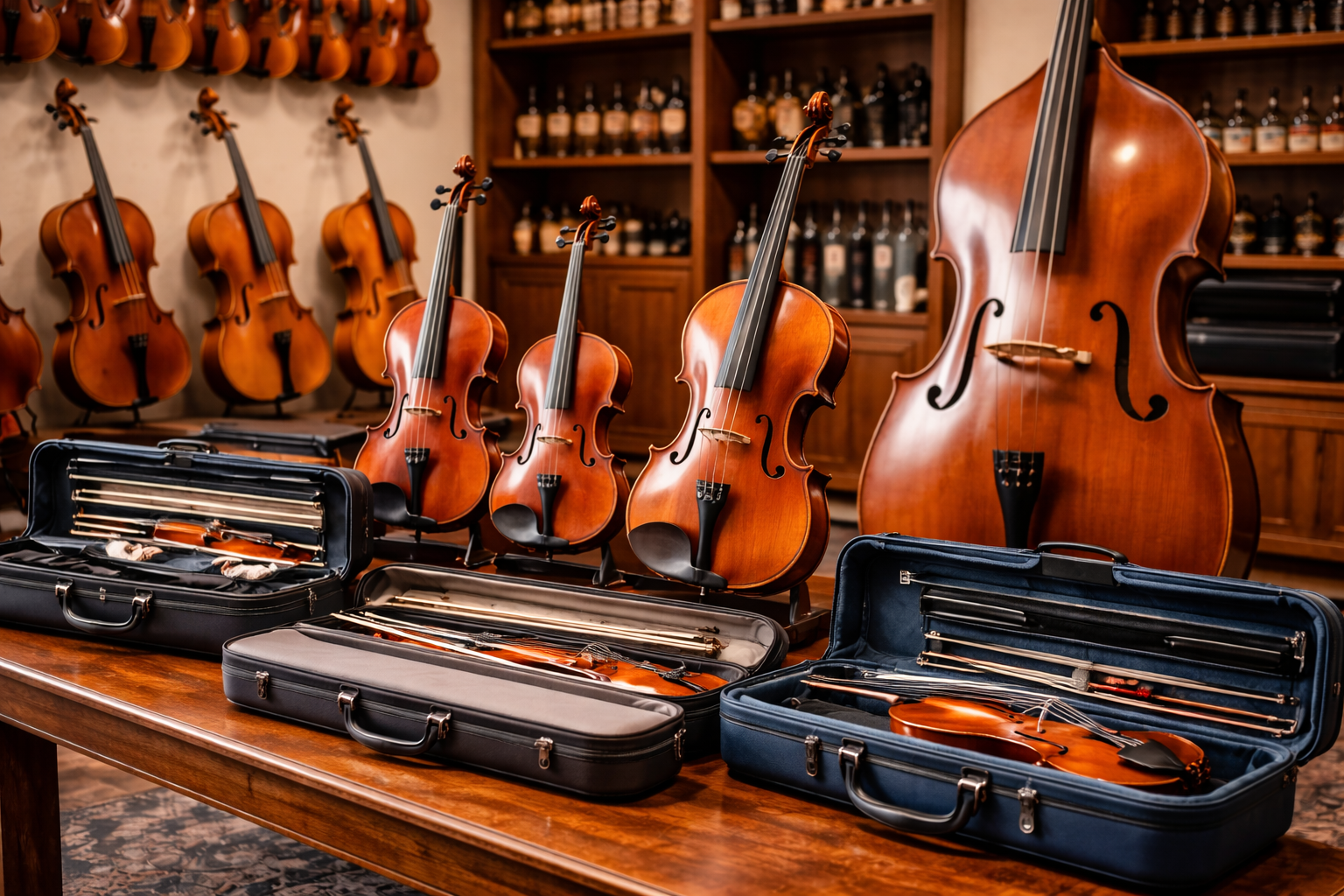
When families start thinking about buying a first orchestral string instrument, the conversation often begins with price. What parents really want to know, though, is not just how much an instrument costs, but whether it is the right kind of instrument for a beginner. They want something that will stay in tune, respond properly, and allow their student to learn without unnecessary frustration.
At Von’s Violin Shop, the answer to that question is much simpler than many people expect. Von’s Violin Shop offers the highest quality of student instrument we can find. While not really comparable to the fine instruments we sell, our student instruments sound far better than the average rental instrument.
Why Renting Is Often Recommended First
Before talking about buying, it’s important to acknowledge that for many beginners, especially younger students just entering school orchestra, renting is often the best place to start. Renting allows a student to begin playing immediately without committing to ownership before size, interest, and long-term commitment are clear.
Renting also solves the problem of growth. Students change sizes, sometimes quickly, and renting avoids the need to replace an instrument that becomes physically inappropriate within a year or two. For families who are just starting out, renting through our sister store, Northland Violins is often the most practical and lowest-risk option. These rental instruments are the same quality that you would buy from Von’s Violin Shop.
That said, some families are set on buying from the beginning, and others reach a point where buying makes sense. When that happens, the question becomes what constitutes a realistic first instrument.
What “Student Instrument” Actually Means
In the orchestral string world, the term student instrument is often misunderstood. A student instrument is not a toy, a disposable item, or a compromise. At Von’s Violin Shop, student instruments represent the lowest quality tier of instrument we sell, but they are also the best quality instruments available at that price point.
Student instruments are factory produced rather than individually crafted. That factory production is what allows them to be affordable. The consistency of modern manufacturing, combined with professional setup by a violin shop, produces instruments that are reliable, playable, and appropriate for learning.
What makes a student instrument a student instrument is not that it is poorly made, but that it is designed to meet a specific goal: providing solid playability and durability at a price that makes sense for beginners.
Is A Factory Produced Instrument Any Good?
Handcrafted instruments take significant time, individual labor and a lifetime of skill to produce, which increases cost. While those instruments can offer greater nuance and complexity, they are not necessary for someone learning the basics of tone production, intonation, and bow control. A student driver doesn’t need a Formula 1 race car. They need something economic and dependable.
Factory-produced student instruments allow beginners to start on instruments that are structurally sound, responsive, and comfortable to play without requiring the financial investment of a handcrafted instrument. When properly set up by a professional shop, a student instrument can serve a player very well through the early years of study.
This is why student instruments are considered the appropriate starting point, not a stepping stone to be rushed through, but a sensible match for a beginner’s needs.
What Comes After Student Instruments
Everything beyond the student category consists of instruments that are either individually crafted, produced in smaller workshops, or made with higher levels of handwork and tonal refinement. These instruments are not “better” because beginners need them, but because advanced players can make use of their additional complexity.
At Von’s Violin Shop, instruments beyond the student level are intended for players who have developed enough technique and musical understanding to benefit from those differences. For a beginner, those advantages often go unused, while the additional cost provides no real benefit at the early stage.
This is why a student instrument is not only realistic for a first purchase, but usually the correct choice.
Why Buying Too Cheap Is Still a Problem
There is an important distinction between a student instrument from a violin shop and the ultra-low-priced instruments often found online. Instruments that fall below the student category frequently suffer from poor materials, unstable construction, and inadequate setup. These instruments may look correct but fail to function properly.
A true student instrument, as defined by a professional shop, is built to be playable. Instruments below that level often make learning harder, not easier, and can discourage students through no fault of their own.
When Buying a First Instrument Makes Sense
Buying a student an instrument makes sense when a family is ready to move beyond renting, when a student is older and finished growing, or when there is a clear commitment to continuing with music. In these cases, a student instrument offers a reliable, cost-effective entry into ownership without unnecessary complexity.
Von’s Violin Shop carries student instruments because they serve a real purpose. They are not placeholders or compromises; they are carefully selected, professionally set up, and intended to support learning.
Final Thoughts
A realistic first instrument is a student instrument, properly sized and professionally set up. It is the lowest quality tier of instrument Von’s Violin Shop sells, but it is also the best value for a beginner and the right place to start.
Whether a family begins by renting through Northland Violins or by purchasing a student instrument from Von’s Violin Shop, the goal is the same: giving the student an instrument that works, encourages progress, and supports a positive experience with music.
If you’re unsure which path makes sense, or if you have an instrument and want to know whether it truly qualifies as a student instrument, bring it in. An honest evaluation can save time, money, and frustration — and set the right foundation from the very beginning.