


For many string players, the instrument gets most of the attention—but the bow is just as important. The bow is how sound is created, shaped, and controlled. A well-chosen bow can dramatically improve tone, articulation, and ease of playing, even on a modest instrument.
Even though you need the bow to play violin, viola and the others, bows are always sold separate from the instrument. The reason for this is that the bow has such an effect on the sound of an instrument, that skilled players want to match their bow to the instrument they already own, or to one they are buying. The choice of bow is a very personal one.
At Von’s Violin Shop, we carry bows ranging from basic student bows starting at $85, all the way to bows that sell for $15,000+ for exceptional bows by the world’s most respected bow makers. Players can come in to Von’s Violin Shop, and try bows at any price point, until they find exactly the one that brings out the sound they are looking for from their instrument. Understanding what goes into a bow—and what separates a good one from a great one—helps players make confident choices.
The Main Parts of a Bow
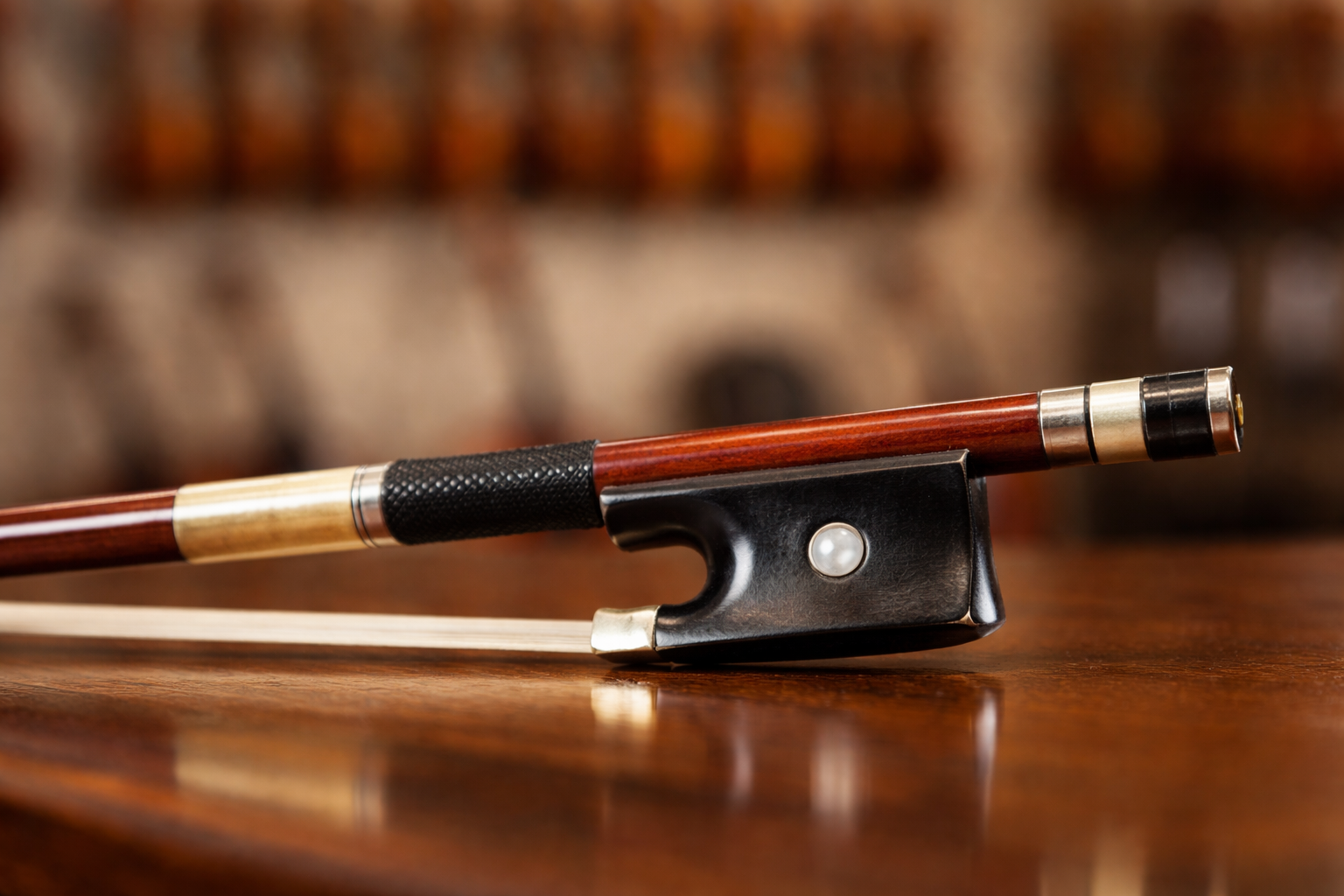
A bow may look simple, but it is a finely balanced tool made of several critical components:
- Stick – Traditionally Pernambuco wood, or in modern bows, it may be carbon fiber
- Hair – Usually white horsehair, thought sometimes it can be black, or even both, for a unique appearance, which grips the string
- Tip (Head) – Reinforces the front of the bow and anchors the hair
- Frog – The adjustable block at the hand end
- Screw and eyelet – Controls hair tension
- Grip and winding – Improve comfort and balance
- Fittings – Metal components (nickel, silver, or gold)
Each part contributes to how the bow feels, responds, and sounds.
How Bows Are Made
Traditional Wooden Bows
High-quality wooden bows begin with careful wood selection. Pernambuco has been favored for over 200 years because of its unique balance of strength, density, and elasticity. The stick is carved by hand, gradually tapered, and then heated and bent into its camber (curve). Small changes in thickness or curve dramatically affect how a bow plays.
After shaping, the frog and screw mechanism are fitted precisely, the bow is haired, and the balance is fine-tuned. In fine bows, this process reflects decades of accumulated knowledge.
Carbon Fiber Bows
Carbon fiber bows are made very differently. Layers of carbon material are molded or rolled to create consistent strength and flexibility. While they lack the organic variability of wood, they offer major advantages:
- Excellent durability
- Resistance to humidity and temperature changes
- Consistent performance from bow to bow
- Often very affordable for students
Carbon fiber bows are popular for beginners, outdoor performances, travel, and school use. Many advancing students also use them as reliable backup bows.
Pernambuco: Why It Matters
Pernambuco (Paubrasilia echinata) is prized because it allows a bow to be strong yet flexible, producing clarity, projection, and controlled bounce. It is also a regulated species, protected under international conservation agreements.
This protection means that:
- Pernambuco bows are increasingly valuable
- Wood selection and responsible sourcing are critical
- Fine bows are made in smaller numbers
The value of Pernambuco is not just rarity—it’s how the material behaves in the hands of a skilled maker.
The Frog: Function and Material
The frog is far more than decoration. It:
- Holds and tensions the hair
- Keeps hair properly spaced from the stick
- Contributes significantly to balance and feel
Most high-quality frogs are made from ebony. Ebony is used because it is:
- Extremely hard and wear-resistant
- Stable when properly seasoned
- Capable of holding precise edges and rails
A well-made ebony frog moves smoothly, seats securely, and holds tension reliably over time.
Silver vs. Gold Fittings
Bow fittings are often described as nickel-mounted, silver-mounted, or gold-mounted.
- Nickel – Common on student and durable working bows
- Silver – Standard for high-quality professional bows
- Gold – Typically reserved for a maker’s finest work
Gold fittings do not automatically mean a bow plays better, but they often indicate that the maker considered that bow among their top tier. Silver or gold mounted bows are always going to be more expensive for this reason. Many extraordinary bows are silver-mounted, and performance always matters more than metal choice.
What Makes a High-Quality Bow?
When evaluating bows at Von’s, we focus on how the bow performs in real playing situations:
- Balance – The bow should feel stable, not tip-heavy or lifeless
- Response – Clean starts to notes without excessive effort
- Control – Predictable behavior at soft and loud dynamics
- Bounce – Consistent off-the-string strokes
- Craftsmanship – Clean fit, smooth screw action, solid head and frog work
A better bow often produces an immediate improvement in tone and ease of playing.
Bow Rehairing: Essential Maintenance
Over time, bow hair wears out, stretches, and accumulates oils and rosin. Regular rehairing restores grip and responsiveness.
At Von’s Violin Shop, bow rehairing starts at $90, Cello and Bass Bows are more expensive. Our work is performed by experienced professionals who:
- Use high-quality hair
- Apply proper tension
- Ensure even spread and alignment
Most players need a rehair every 6–12 months, depending on usage.
Price Ranges at Von’s Violin Shop
Bow prices vary widely based on materials, maker, and craftsmanship:
- Student bows: starting around $85
- Intermediate bows: can be a few hundred to a few thousand dollars
- Advanced and fine bows: $5,000–$15,000+
At the highest level, bows by renowned makers such as François Tourte and Eugène Sartory set historical and performance benchmarks. Modern makers continue that tradition, and availability varies depending on inventory.
Choosing the Right Bow
The “best” bow is not the most expensive—it’s the one that:
- Matches the player’s technique
- Works well with their instrument
- Feels comfortable and controllable
Trying bows in person is the only reliable way to find that match.
Final Thoughts
A bow is a precision tool that shapes every note a player produces. Whether it’s a durable carbon fiber bow for school use or a finely crafted Pernambuco bow for advanced performance, understanding how bows are made helps players choose wisely.
Bring Your Instrument In
If you’re considering a new bow—or wondering whether a rehair or upgrade would help—bring your instrument to Von’s Violin Shop. We’re happy to help you compare options and find the bow that truly works for you.